Sustainability and innovation in automotive VET: INFODEF at VET4CHAINS Aachen meeting

The INFODEF project team recently had the opportunity to participate in an inspiring two-day consortium meeting in Aachen, Germany, hosted by FIR, the coordinators of VET4CHAINS project. This collaborative meeting brought together key players in the automotive sector to share insights and strategies for advancing vocational education and training. The agenda was packed with engaging sessions, including a dynamic SWOT analysis workshop. Consortium members worked together to pinpoint the strengths, weaknesses, opportunities, and threats that the project may encounter. This collaborative exercise laid a robust foundation for strategic planning, ensuring the project’s ultimate success. Additionally, participants showcased various platform solutions, receiving enthusiastic feedback that underscored the transformative potential these innovations hold. A highlight of the meeting was an enlightening tour of the FIR Demonstration Factory. This visit opened doors to cutting-edge technologies and innovative practices being developed through a cooperative approach. Witnessing FIR’s commitment to pushing the boundaries of industrial research and development was truly inspiring, and the exchange of ideas during this tour sparked valuable discussions. Overall, the meeting was a success, enhancing collaboration among partners. It presents a fantastic opportunity for INFODEF to work alongside esteemed partners in Mexico, Colombia, and Germany, all equally invested in the automotive sector. About the VET4CHAINS Project VET4CHAINS is dedicated to elevating the education and professional development of individuals in Vocational Education and Training (VET) and employees of small to medium-sized enterprises (SMEs) in the automotive industry. This initiative introduces a comprehensive Work-Based Learning (WBL) training program that seamlessly integrates online and face-to-face learning experiences. The program emphasizes five critical areas: an introduction to WBL, sustainable value chains, challenges of Industry 4.0, effective change management, and the pivotal role of digital innovation in SMEs. The VET4CHAINS project exemplifies a joint international initiative focused on improving Work-Based Learning (WBL) within the automotive sector. Key partners such as FIR, CAMEXA, CTA, and INFODEF each bring their unique skills and resources to the table, collaborating to advance vocational education and training in various regions.
Facing the demographic challenge: INFODEF and the HABITABLE project at the ‘Territories with a Future’ forum

On February 2, INFODEF participated in the “Territories with a Future” forum held in Arévalo (Ávila). During the first day of the event, Federico Campos presented the Erasmus CoVE project HABITABLE, which INFODEF has been working on for several months, alongside partners from six other European countries, to address the shortage of skilled workers in digitalization and ecological transition skills in the habitat sector at the European level. HABITABLE is an innovative project in the field of vocational training and is particularly relevant to the theme of the forum as it is a pioneer in Spain and Europe in the habitat area. The forum, which has several previous editions, is organized by the AEICE efficient habitat cluster and the Ávila Foundation, and this time focused on addressing the future of young people in the face of the current demographic challenge. The goal is to place young people at the core of territorial development to stimulate the economy, create new job opportunities, and combat depopulation. Throughout the two days, topics such as entrepreneurship and rural housing were discussed, aiming to reverse the depopulation trend through training and youth involvement. Nearly 200 participants, including representatives from private companies, public administration, foundations, young people, and trainers, learned firsthand how the HABITABLE project aims to align vocational training with the needs of the habitat sector as defined in the regional sectoral plan (in the case of Castilla y Leon). In his speech, Federico Campos, as project coordinator at INFODEF, emphasized the crucial importance of vocational training to promote entrepreneurship in rural areas, establishing population in activities related to heritage, digitalization, and ecological transformation through the circular economy. The HABITABLE project involves CoVEs (Centers of Vocational Excellence) linked to the habitat. These centers will participate, along with other project partners, in developing various products over the 48-month duration of the project, including: the Skills HUB to facilitate online training for trainers, SMEs, and students; an online dual competency center to support SMEs in managing work-based learning programs; the Smart SIP, an intelligent platform for sustainability planning; and a skills ecosystem for the habitat sector where policy recommendations will be developed. The “Territories with a Future” forum also took the opportunity to present some success stories to encourage young people to embark on entrepreneurship. Presentations included “From the Forest to Your Home,” with Marta Corella from Fundación Copade; the Cultural Association El Cinorrio, with Lucas Rodríguez Marcos; Circular Culture, with Beatriz Quintana; and Laguna del Oso by Kerbest, with Adrián Jiménez and José María Olarieta.
INFODEF joins COPADE in promoting sustainable development

INFODEF is now a partner of the COPADE Foundation (Commerce for Development), an organization dedicated to promoting fair trade, environmental sustainability, and development cooperation. This collaboration underscores INFODEF’s commitment to the Sustainable Development Goals (SDGs), particularly in areas such as responsible production and consumption (SDG 12), decent work (SDG 8), and climate action (SDG 13). COPADE facilitates market access for producer organizations in Latin America and Spain, empowering them through responsible and sustainable practices. Additionally, it actively participates in awareness and internationalization projects across Europe, Africa, and the Americas, fostering ethical trade and a socially and environmentally responsible approach. Through this alliance, INFODEF will bring its expertise in professional training to support projects focused on strengthening skills in sustainability and local and international development. It is an opportunity to bolster COPADE’s work in educational and awareness initiatives, promoting skills that facilitate the transition to fairer and more sustainable business models. This collaboration creates unique synergies to drive projects benefiting vulnerable communities, involving local actors, and promoting circular economy and ethical trade.
IMMERSE Final Conference: Five years advancing the integration of refugee and migrant children in Europe
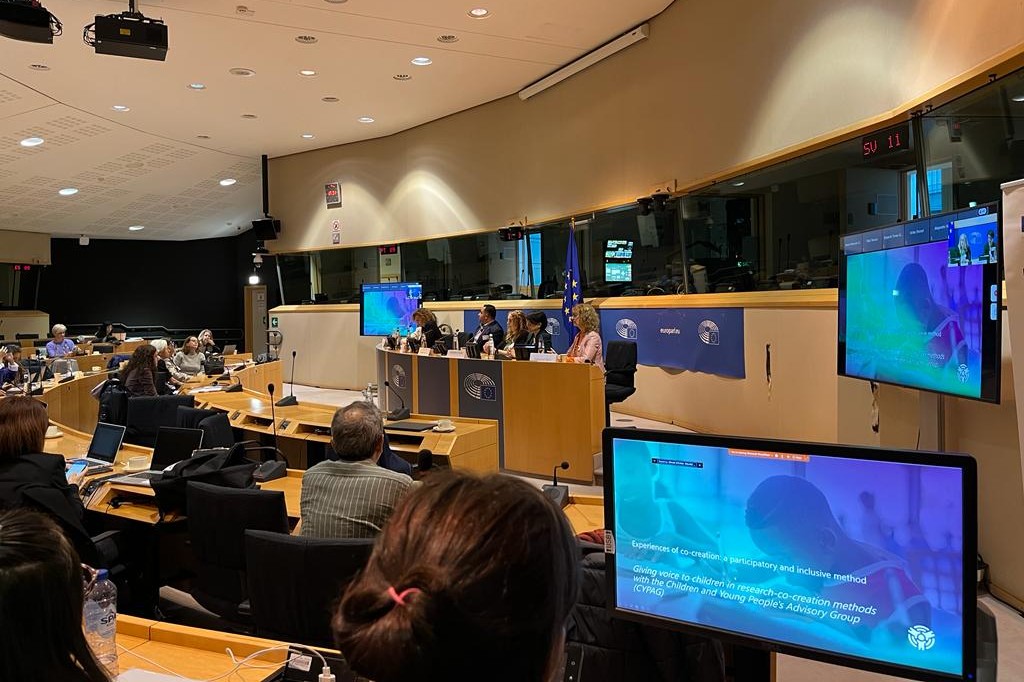
On November 6th, INFODEF took part in the final and most significant dissemination event of the IMMERSE project, held at the European Parliament in Brussels. Hosted by Member of the European Parliament Juan Fernando López Aguilar, the conference brought together IMMERSE and REFUGE-ED projects to consolidate efforts and share knowledge on fostering the socio-educational integration of migrant and refugee children across Europe. Under the title “Enhancing socio-educational integration of refugee and migrant children through research,” the event featured three roundtables with contributions from policymakers, educators, mental health professionals, researchers, practitioners, children, families, and civil society organizations. Discussions highlighted the achievements of both projects and the challenges ahead, emphasizing that integration requires inclusive, evidence-based policies and the active involvement of all stakeholders. About IMMERSE IMMERSE (Integration Mapping of Refugee and Migrant Children in Schools and Other Experiential Environments in Europe) is a Horizon 2020 project coordinated by the Universidad Pontificia Comillas ICAI-ICADE (Spain). Over the past five years, it has worked to define a new generation of indicators for measuring the integration and socio-educational inclusion of refugee and migrant children in Europe. The project engaged more than 24,000 children, parents, and teachers across six European countries (Belgium, Germany, Greece, Ireland, Italy, and Spain), ensuring that the voices of migrant and refugee children were at the heart of its research and outputs. Among its most remarkable outcomes is the Dashboard of Socio-Educational Integration Indicators, a publicly accessible data visualization tool built on 30 key indicators of socio-educational inclusion of refugee and migrant children in Europe. This dashboard allows policymakers, educators, NGOs, and researchers to analyze integration dynamics in real time, offering valuable insights to support evidence-based decision-making and more inclusive societies. Other contributions from the project include policy briefs and an online database with useful recommendations on the integration of migrant minors in Europe. Awareness campaigns such as ‘IMMERSE Yourself‘ showcased the co-creation methods that involved children and their families throughout the project development. The IMMERSE project has been carried out by a strong international consortium of universities, research centers, NGOs, and public institutions: Universidad Pontificia Comillas ICAI-ICADE (Spain), Zabala Innovating Consulting (Spain), INFODEF Instituto para el Fomento del Desarrollo y la Formación (Spain), Ministerio de Trabajo, Migraciones y Seguridad Social (Spain), INETUM (Spain), University College Cork (Ireland), Save The Children Italy (Italy), DOZ E. V. International (Germany), Active Citizen Europe (Belgium), Regional Directorate of Primary and Secondary Education of Crete (Greece), Panteion University of Social and Political Studies (Greece).
Launching HABITABLE project: Transforming skills for the habitat sector

The international Erasmus+ project HABITABLE kicked off with a meeting held on October 9 at the Monasterio del Prado in Valladolid. This ambitious project aims to address the growing demand for skilled workers in digitalization and ecological transition within the European habitat sector. As part of the Centers of Vocational Excellence (CoVE) initiative, HABITABLE brings together educational institutions, sector organizations, and companies to promote excellence and innovation in vocational training. INFODEF, along with 17 other partners from six countries (Spain, Portugal, Austria, Greece, Georgia, and Moldova), is part of an international consortium aiming to redefine vocational training in the habitat sector. At the first in-person partners meeting, INFODEF presented the project’s vision and its role in developing tools to modernize the training of habitat professionals, focusing on sustainability and digitalization. Among the innovative solutions to be developed under HABITABLE project: Smart SIP: An intelligent monitoring platform that will map employment trends and the skills needed in the habitat sector, offering an updated training supply panel aligned with market demands. Skills HUB: An online training center that will provide micro-credentials to sector professionals, along with a guidance space to support career development in sustainable habitat. Dual Online Centre: A collaborative space facilitating work-based learning (WBL), promoting partnerships between educational centers and companies to strengthen the provision of digital and green training in the sector. Habitat Skills Ecosystem: A European network of CoVEs to foster collaboration and generate policy recommendations to drive the transition to sustainable habitat across Europe. Project relevance and projection With a budget of €4 million and the participation of key players in vocational training and the habitat industry, HABITABLE represents a unique opportunity to modernize the sector and secure its long-term competitiveness. INFODEF, with its expertise in designing innovative training programs, will play a key role in creating resources that ensure workers are ready to face the challenges of digitalization and sustainability. The dissemination event, held on October 10, provided an opportunity to discuss the sector’s current challenges and the solutions offered by the HABITABLE project. Through roundtables, expert panels, and interactive activities, participants analyzed the new skills demanded in the habitat sector, the existing vocational training supply, and the keys to social and labor inclusion in this area. This meeting marked the beginning of a project that is able to transform the European habitat sector. HABITABLE takes a further step toward integrating digitalization and sustainability into vocational education, fostering the development of a skills ecosystem that will strengthen both the habitat sector and the professionals within it.
Global alliances for family well-being: INFODEF at the World Family Summit 2023 in Brazil

From June 14th to 16th, Balneário Camboriú, Brazil, hosted the World Family Summit 2023, an event that brought together key figures from around the globe to discuss how to accelerate the implementation of the 2030 Agenda for Sustainable Development Goals at the sub-national and local level. Under the theme “InvestInFamilies,” the summit emphasized the importance of families as fundamental pillars in achieving the Sustainable Development Goals (SDGs). The Summit faced the challenge of creating effective partnerships between governments, communities, and families to address social, economic, and environmental challenges. Throughout various sessions, participants discussed the need for public policies to be more inclusive and responsive to all families needs. Critical topics were discussed such as poverty, quality education, gender equality, and climate change; highlighting that “Leaving no one behind” is essential for achieving a sustainable development. The participation in the event of INFODEF’s director, Jesús Boyano, provided insights on how to integrate inclusive approaches into education and training policies aligned with the SDGs. One of the projects on this issue that INFODEF has been working on recently is SME Green Skills Hub; which is dedicated to support the implementation of the SDGs in SMEs through VET. Jesús participation in the 3rd Plenary Session about Sustainable Cities and Strong Communities, offered an opportunity to exchange ideas and experiences with other global actors committed to the well-being of families and the community as a whole. The experience gained at the World Family Summit 2023 reinforces our commitment to contribute to a more sustainable and inclusive future for all, aligning our actions with SDG 10 by reducing inequalities, promoting SDG 16 through the creation of peaceful and just societies, and strengthening SDG 17 through strategic partnerships with other actors to achieve these goals.
Empowering VET for the green and digital transition in habitat

Last Wednesday, INFODEF participated in the presentation of the international HABITABLE project at the headquarters of the Department of Education of the Regional Government of Castilla y León. This ambitious project, approved in the latest Erasmus+ call, has asits main goal to address the shortage of workers skilled in digitalization and green transition competencies in the habitat sector at the European level. It is a CoVE (Centers of Vocational Excellence) project, an initiative that brings together vocational training centers from various countries to develop innovative actions and resources, promoting excellence in education and vocational training through international and multi-sector collaboration. Jesús Boyano, as director of INFODEF, spoke at the presentation of the project that they will work on for the next 48 months. The event also featured the participation of prominent representatives from the education and habitat sectors, including Rocío Lucas, Minister of Education of the Regional Government; Agustín Sigüenza, Director-General of Vocational and Special Training; Enrique Cobreros, Director of the Efficient Habitat Cluster (AEICE); Pablo Sabín, Executive Director of Cesefor; Eva Testa, President of the Institute of Construction of Castilla y León; and Pedro Fernández, President of the Construction Labour Foundation. About the HABITABLE project The HABITABLE project, with a budget of 4 million euros, seeks to enhance the responsiveness of vocational education and training (VET) within a “skills ecosystem” for the habitat sector. To achieve this, it proposes active collaboration between VET institutions, local partners, and an international network of Centers of Vocational Excellence (CoVE). The main goal of this skills ecosystem is to contribute to regional development, innovation, smart specialization, and public-private collaboration strategies in the habitat sector by providing skilled personnel to the specific value chains of industrial ecosystems linked to the sector. The project will begin with an intelligent analysis of demand and a study of the training provided by existing VET entities. This will be accomplished through the development of necessary digital tools that will enable the creation of a continuous training strategy for trainers, workers, and employers in the habitat sector. A certification system with micro-credentials will keep workers’ curricula up to date and propose training pathways to enhance their skills intelligently. Additionally, a dissemination strategy will be deployed to extend the project’s tools and methodology to all European regions. The HABITABLE project is coordinated by AEICE and brings together the efforts of 17 partners from six European countries (Spain, Portugal, Austria, Greece, Georgia, and Moldova). The project consortium includes AEICE, the Department of Education of the Regional Government of Castilla y León (Spain), the Institute for the Promotion of Development and Training (INFODEF), the Foundation Institute of Construction of Castilla y León ICCL (Spain), the Foundation Center for Forestry Services and Promotion and its Industry of Castilla y León CESEFOR (Spain), the Construction Labour Foundation (Spain), the Business Association of Research Technological Center of Furniture and Wood of the Region of Murcia CETEM (Spain), Cluster Habitat Sustentável (Portugal), Centro Tecnológico da Cerâmica e do Vidro (Portugal), University of Aveiro (Portugal), Holzcluster Steiermark GmbH (Austria), Fachhochschule Salzburg GmbH (Austria), Cluster Bioeconomy and Environment of Western Macedonia (Greece), Dimitra Educational Consulting AE (Greece), University of Thessaly (Greece), Public Institution Centre of Excellence in Energy and Electronics (Moldova), Construction College “Construct2” (Georgia), Austrian Institute for Education Research of the Economy IBW (Austria). The participating training centers thus join the European Network of Centers of Vocational Excellence (CoVE Network), positioning themselves as European leaders in the development of professional skills in the habitat sector. Impact and future of the project In the short term, the HABITABLE project aims to establish a common reference framework for the training of necessary skills in the habitat sector in the six partner countries. In the medium term, it seeks to extend this framework to the entire European Union, achieving the green and digital transition of the labor market in the habitat sector and for all involved actors. The director of AEICE, the coordinating entity of the project, emphasized that HABITABLE arrives to reinforce vocational training and the competitiveness of the habitat sector in the region. This project aligns with the Sectoral Plan for Habitat of Castilla y León approved in 2022, which establishes a roadmap for the sector’s advancement in sustainability, technology, industrialization, innovation, health, and well-being, benefiting over 24,000 companies in the region and generating economic activity. In the words of Education Minister Rocío Lucas, “We face a difficult challenge, as only 10 projects are approved for all European countries, out of more than 100 proposals submitted to this call. But we face this challenge with enthusiasm and hope, confident in our potential and convinced of the quality of our vocational training system”.